What Is a Systematic Transfer Plan (STP) in Mutual Funds? Types, Benefits & Tax


What Is a Systematic Transfer Plan (STP)?
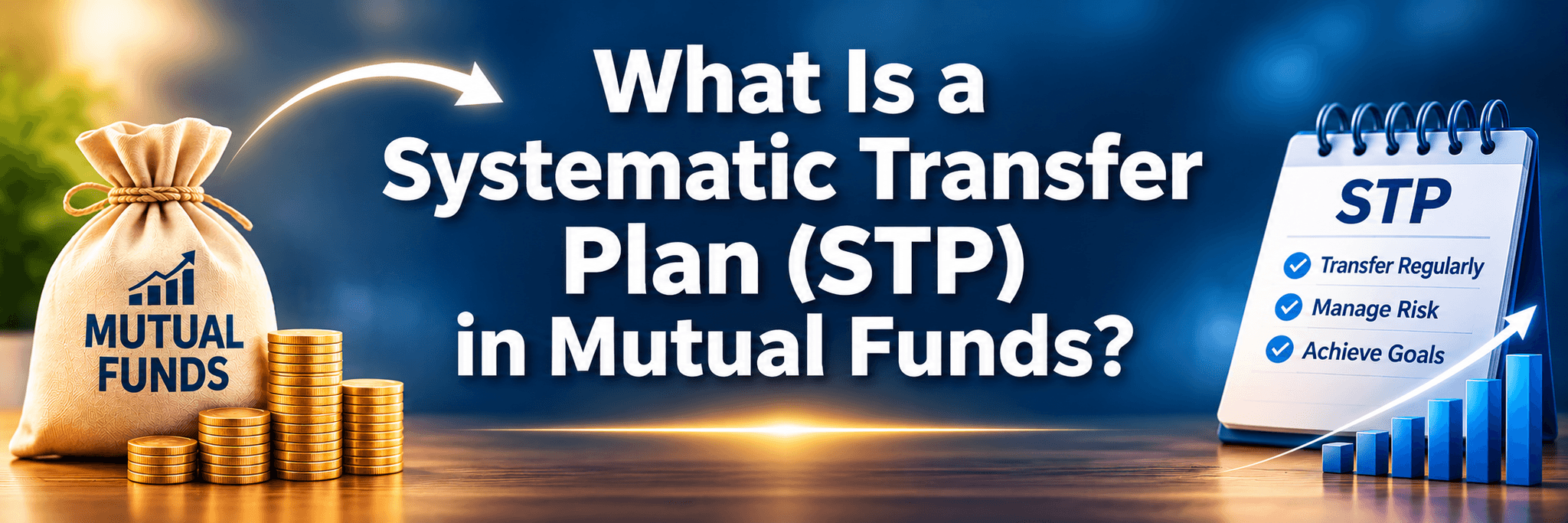
A Systematic Transfer Plan (STP) lets you move a fixed amount, or a set number of units, from one mutual fund scheme to another at regular intervals. Typically, money sits in a lower-risk source fund (such as a liquid or debt fund) and moves in instalments into a target fund (such as an equity or hybrid fund).
An STP is useful when you have a lump sum but do not want to invest it all in equities at once. Instead of trying to pick the right day to enter the market, you spread the entry over weeks or months.
How Does an STP Work?
- Invest a lump sum in a source fund, usually a debt or liquid fund.
- Choose a target fund, usually an equity or hybrid fund from the same fund house.
- Set the transfer details: amount, frequency (for example weekly, monthly or quarterly) and number of transfers.
- Transfers happen automatically. On each date, the fund house redeems units from the source fund and uses the money to buy units in the target fund.
Money that has not yet moved stays in the source fund and continues to earn returns there, which depend on that fund's performance and are not guaranteed.
A simple illustration (hypothetical numbers): You have ₹6 lakh and want equity exposure. You invest it in a debt fund and set an STP of ₹1 lakh a month into an equity fund for six months. Each month ₹1 lakh moves, so you buy equity units at six different prices instead of one.
Note: STP is generally available only between schemes of the same fund house (AMC).
Types of Systematic Transfer Plans
|
Type |
How it works |
Suits |
|
Fixed STP |
The same amount moves at every interval |
Investors who want a simple, predictable schedule |
|
Capital Appreciation STP |
Only the gains earned in the source fund are transferred, so the original capital stays put |
Investors who want to protect their principal while taking some equity exposure |
|
Flexi STP |
The amount varies, based on a formula or the investor's choice, such as higher transfers when markets fall |
Investors comfortable with a more active approach |
The exact options available differ from one fund house to another.
Benefits of an STP
- Reduces timing risk. You do not have to guess the "right day" to invest a large sum.
- Rupee cost averaging. Spreading purchases across different prices can lower the average cost over time and reduce the impact of volatility.
- Disciplined, gradual entry into equity. Helpful if you are nervous about a sudden fall right after investing.
- Idle money works. The portion waiting to be transferred earns returns in the source fund.
- Automation. Once set up, it needs little effort.
- Flexibility. You can usually stop or modify an STP by submitting a request to the fund house.
STP vs SIP: What Is the Difference?
|
Feature |
STP |
SIP |
|
Source of money |
An existing mutual fund investment |
Your bank account |
|
Best for |
Investing a lump sum gradually |
Investing regularly from your income |
|
Money moves |
From one scheme to another |
From your bank into a scheme |
|
Typical use |
Bonus, business income, maturity proceeds, inheritance |
Monthly salary-based investing |
If you earn a regular income and invest from it every month, a SIP fits. If you already have a lump sum, an STP is a way to deploy it in stages.
Who Should Consider an STP?
An STP may suit you if you:
- Have received a lump sum and want to move into equity gradually.
- Are a first-time equity investor nervous about entering the market all at once.
- Want to shift from debt to equity over time as your goals change.
- Prefer a rule-based approach to timing.
- Want your idle cash to earn returns while it waits.
Things to Keep in Mind (Risks and Limits)
- Market risk remains. The target fund can fall, and returns are not guaranteed. An STP reduces entry-timing risk but does not eliminate market risk.
- It can underperform a lump sum. If markets rise steadily, investing everything on day one may do better. If they fall, an STP may do better. Nobody can know in advance.
- Taxes and exit loads. Each transfer is treated as a redemption from the source fund, so it can attract capital gains tax and an exit load, which reduce your returns.
- Same fund house only. You can move money only between schemes of the same AMC.
- Minimums vary. Fund houses set their own minimum amounts, number of transfers and duration. A typical minimum duration is six months to a year, but check the scheme documents.
- Source fund risk. Debt funds carry their own risks, such as credit risk and interest rate risk. Choose the source fund carefully.
How Is an STP Taxed?
Each STP transfer is treated as a redemption from the source fund and a purchase in the target fund. That means every transfer can create a capital gain or loss. The tax depends on the type of source fund and how long you have held the units.
Under rules reported for FY 2026-27:
- Equity-oriented funds (at least 65% in listed domestic equity): units held for more than 12 months are long-term, taxed at 12.5% on gains above ₹1.25 lakh a year; units held for 12 months or less are short-term, taxed at 20%.
- Debt funds: for "specified mutual funds" (mainly debt and money market funds) bought on or after 1 April 2023, gains are taxed at your income tax slab rate regardless of holding period.
- Other non-equity funds: long-term after 24 months at 12.5%, with short-term gains taxed at slab rate.
Tax rules change, and the right treatment depends on the specific fund and your situation, so consult a tax professional.
How to Start an STP
- Decide your goal and risk appetite. Know how much equity exposure you want.
- Choose a source fund (such as a liquid or debt fund) and a target fund (equity or hybrid) from the same fund house.
- Invest the lump sum in the source fund.
- Pick the type: fixed, capital appreciation or flexi.
- Set the frequency, amount and duration.
- Submit the request through the fund house, its website or app, or your distributor or platform.
- Review periodically. You can stop the STP by submitting a request.
Common Mistakes to Avoid
- Choosing a risky source fund. Parking your money in a fund that can swing in value defeats the purpose.
- Ignoring exit loads and tax. Check both before you start.
- Too short a period. A very short STP gives little averaging benefit.
- Stopping at the first dip. Decide the plan in advance and stick to it unless your goals change.
- Forgetting your asset allocation. The target fund should fit your risk profile and time horizon.
Key Takeaways
- An STP moves money between two schemes of the same fund house at regular intervals.
- It is mainly used to invest a lump sum into equity gradually.
- The three types are fixed, capital appreciation and flexi.
- It helps with rupee cost averaging but does not remove market risk.
- Each transfer is a redemption, so check tax and exit load
Frequently Asked Questions
A facility that moves money from one mutual fund scheme to another at regular intervals.
An SIP invests from your bank account into a scheme. An STP moves money between schemes you already hold.
Fixed, capital appreciation and flexi STP.
Frequencies such as weekly, monthly or quarterly are commonly offered. It depends on the fund house.
Generally no. STP works between schemes of the same AMC.
Yes. Each transfer is a redemption from the source fund and may attract capital gains tax.
It can apply to the source fund, depending on the scheme. Check the scheme information document
Fund houses set their own minimums
Yes, usually by submitting a request to the fund house.
No. It spreads out your entry and may reduce timing risk, but returns are not guaranteed.
It depends on how markets move. An STP lowers the risk of investing everything at a market peak but may lag in a steadily rising market.

Popular Blogs