

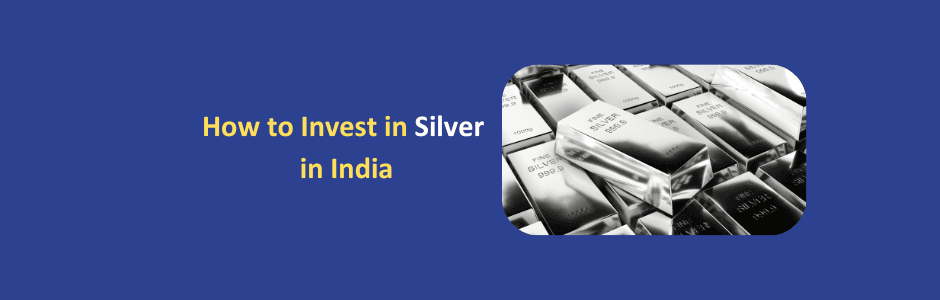
Silver has emerged as both a precious metal investment and an industrial demand-driven asset. With rising use in solar panels, electric vehicles, electronics, and renewable energy, silver is no longer just a jewellery metal — it’s a strategic commodity.
If you're wondering how to invest in silver in India, this guide covers all available options, risks, benefits, and taxation aspects.
Why Invest in Silver?
Silver acts as:
- An inflation hedge
- A portfolio diversifier
- A precious metal alternative to gold
- An industrial growth-linked commodity
Unlike gold, silver has dual demand — investment demand + industrial demand, making it more volatile but potentially higher returning in commodity cycles.
Ways to Invest in Silver in India
1. Physical Silver (Coins, Bars, Jewellery)
You can buy:
- Silver coins
- Silver bars
- Silver jewellery
- Digital silver via online platforms
Pros:
- Tangible asset
- No demat account required
Cons:
- Storage and safety concerns
- GST applicable
- Making charges in jewellery
- Liquidity spread
Best for: Traditional investors.
2. Silver ETFs (Most Popular Method)
Silver ETFs track domestic silver prices and are traded on NSE and BSE.
Popular Silver ETFs in India:
- Nippon India Silver ETF
- HDFC Silver ETF
- ICICI Prudential Silver ETF
- SBI Silver ETF
- Kotak Silver ETF
- Aditya Birla Sun Life Silver ETF
How to Invest:
- Open demat & trading account with JM Financial Serices
- Search silver ETF
- Buy units like shares
No storage issue. Transparent pricing. Easy liquidity.
Best for: Long-term investors.
3. Silver Mutual Funds
Silver mutual funds invest in silver ETFs.
- No demat required
- SIP option available
- Suitable for beginners
Best for: Small ticket investors.
4. Silver Futures (MCX Trading)
Silver futures trade on MCX (Multi Commodity Exchange).
Contracts available:
- Silver
- Silver Mini
- Silver Micro
Requires:
- Commodity trading account
- Margin funding
Best for: Traders.
High risk due to leverage.
5. Silver Mining Stocks (Indirect Exposure)
India does not have pure silver mining companies.
Indirect exposure via:
Returns depend on company performance, not purely silver price.
Factors Affecting Silver Prices
-
Industrial demand
- Solar & EV growth
- Inflation trends
- US Dollar movement
- Global economic growth
- Gold price movement
Silver is often more volatile than gold.
Advantages of Investing in Silver
-
Inflation hedge
- Industrial demand growth
- Renewable energy demand support
- Portfolio diversification
- Lower entry price compared to gold
- Commodity cycle upside potential
- Hedge against currency depreciation
Disadvantages of Investing in Silver
-
High price volatility
- Industrial slowdown impact
- Commodity cycle dependency
- Currency risk (for global exposure)
- Leverage risk in futures
- Liquidity spread in physical silver
- Taxation on gains
Taxation on Silver Investment
-
Physical silver: Capital gains tax applicable
- Silver ETFs & funds: Taxed as non-equity mutual funds
- Futures: Business income taxation
Consult a tax advisor for updated slab treatment.
Silver vs Gold: Which is Better?
|
Feature |
Silver |
Gold |
|
Volatility |
High |
Moderate |
|
Industrial Demand |
High |
Low |
|
Stability |
Lower |
Higher |
|
Entry Cost |
Lower |
Higher |
Silver may outperform during economic expansion phases.

Popular Blogs