

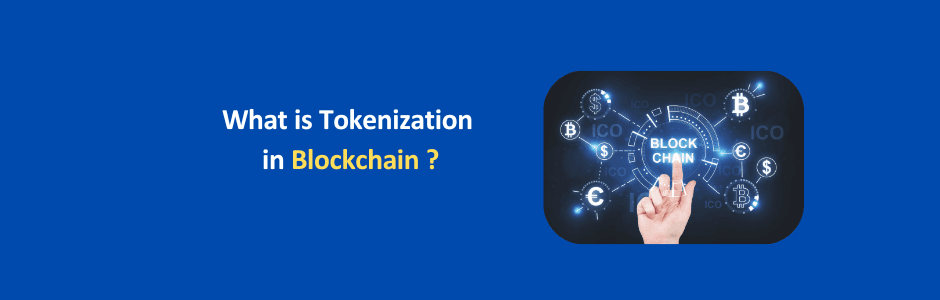
Imagine owning a fraction of a Mumbai skyscraper for ₹5,000. Or buying a slice of a US Treasury bond from your phone at midnight. Or trading carbon credits with a buyer in Germany, settled in seconds, no bank required. This is not the future — it is happening right now, powered by blockchain tokenization. The tokenized asset market crossed $24 billion in mid-2025, grew 380% in three years, and is projected to reach $2 trillion by 2030. Here is everything you need to understand about tokenization — in plain language.
🔗 What is Tokenization in Blockchain?
Tokenization is the process of converting ownership rights of a real-world asset — physical or financial — into a digital token recorded on a blockchain. Each token represents a defined share of the underlying asset, backed by a legal ownership structure, and governed by a smart contract that automates all rules, transfers, and payments.
Think of it this way: a commercial property worth ₹100 crore is difficult for most investors to access — you need ₹100 crore, a lawyer, months of paperwork, and a local broker. Tokenize that property into 1 crore digital tokens of ₹100 each — and suddenly any investor with a crypto wallet can own a fraction of that building, receive proportional rental income, and sell their tokens anytime on a secondary marketplace. That is the power of tokenization.
- Token = Digital proof of ownership, stored on an immutable blockchain ledger
- Smart contract = Self-executing code that automates income distribution, transfers, compliance, and governance
- Blockchain = The shared, tamper-proof ledger that records every token transaction transparently
⚙️ How Does Tokenization Work? — 5 Simple Steps
- Step 1 :- Asset Selection & Legal Structure: Choose the asset (real estate, bond, equity) and create a legal ownership structure (SPV, trust, fund) that links the token to real-world legal rights
- Step 2 :- Smart Contract Creation: Developers write smart contracts that define token supply, ownership rules, dividend/income distribution, transferability, and compliance checks (KYC/AML)
- Step 3 :- Token Issuance: Tokens are minted on a blockchain (Ethereum, Polygon, Stellar, or permissioned chains like JP Morgan's Onyx) and distributed to investors via a compliant issuance platform
- Step 4 :- Investor Purchase: Investors buy tokens using fiat currency or crypto through a regulated platform — receiving tokens in their digital wallets representing fractional ownership
- Step 5 :- Secondary Trading & Income: Token holders can trade on secondary markets 24/7, receive automated income (rental yield, bond coupon, dividend) via smart contract, and exit without brokers or paperwork
📊 What Can Be Tokenized? — Asset Types & Market Data
|
Asset Type |
Real World Example |
Blockchain Benefit |
Market Size / Projection |
|
Real Estate |
Fractional ownership of commercial property |
Buy ₹10,000 worth of a skyscraper; 24/7 trading; T+0 settlement |
$3.2 trillion by 2030 (BCG) |
|
Government Bonds & Treasuries |
US T-bills tokenized on Ethereum |
Near-instant settlement; global access; automated coupon payments |
$8.7 billion on-chain (2025) |
|
Private Credit & Debt |
Corporate loans issued as digital tokens |
Bypass intermediaries; global investor base; lower issuance cost |
Fastest growing RWA category 2025 |
|
Equities & Stocks |
Tokenized shares of listed companies |
Fractional ownership; 24/7 trading; cross-border access |
$402.5 billion locked liquidity |
|
Commodities |
Gold, silver, agricultural produce |
Transparent provenance; instant transfer; no storage cost |
Active on multiple chains |
|
Art & Collectibles |
Fine art, luxury goods, rare collectibles |
Fractional ownership; global liquidity; verified provenance |
Traction growing via NFT infra |
|
Carbon Credits & Green Bonds |
Renewable energy certificates, ESG assets |
Transparent impact tracking; direct ESG investment access |
Key 2026 growth category |
⚖️ Traditional Finance vs Tokenized Assets — Key Differences
|
Parameter |
Traditional Finance |
Tokenized Asset |
|
Settlement Time |
T+2 (2 business days) |
Near-instant (T+0) |
|
Market Hours |
9 AM – 3:30 PM (exchange hours) |
24 hours, 7 days a week |
|
Minimum Investment |
Full asset value (often ₹lakhs–crores) |
Fractional — can start from ₹100 |
|
Intermediaries |
Broker, custodian, clearing house, depository |
Smart contract — no middlemen |
|
Transparency |
Limited — private ledgers |
Full — public/permissioned blockchain |
|
Geographic Access |
Jurisdiction-restricted |
Global — any wallet, any country |
|
Liquidity |
Illiquid for private assets |
Programmable liquidity pools |
|
Cost |
High (brokerage + custody + transfer fees) |
Low (smart contract automation) |
🌍 Real-World Tokenization Examples — Who Is Doing It Right Now?
- BlackRock BUIDL Fund — The world's largest asset manager launched a tokenized money market fund on Ethereum in 2024. BUIDL is now the largest tokenized fund by value, with $2.88 billion in total value locked. Institutional investors earn on-chain yields on US dollar assets — no broker, instant settlement
- Franklin Templeton BENJI — Franklin Templeton's tokenized money market fund on the Stellar blockchain, with approximately $800 million in tokens as of early 2026 — one of the earliest and most successful institutional tokenization projects
- JPMorgan Onyx — JPMorgan's blockchain platform processes tokenized repo transactions worth billions daily, reducing collateral movement from days to minutes between institutional counterparties
- Coinbase Tokenized Stocks — Coinbase launched tokenized equities for US investors in late 2025, offering 24/7 fractional ownership of listed stocks on-chain — bringing Wall Street to blockchain
- India Context — SEBI has been exploring tokenization through its regulatory sandbox. The RBI's CBDC (e-Rupee) pilot is a form of currency tokenization. Indian fintech and real estate platforms are piloting fractional tokenized property investments, with regulatory frameworks expected to solidify through 2026–27
✅ Strengths of Blockchain Tokenization
- Fractional ownership — break high-value, illiquid assets (property, private equity, fine art) into affordable pieces — democratising access for retail investors globally
- 24/7 liquidity — tokenized assets trade round the clock on secondary markets — unlike traditional assets locked to exchange hours and multi-day settlement
- Near-instant settlement — T+0 settlement via blockchain eliminates counterparty risk and frees capital that would otherwise be locked in clearing cycles
- Transparency and immutability — every ownership record, transaction, and income payment is stored on an auditable, tamper-proof blockchain ledger
- Smart contract automation — coupon payments, rental distributions, voting rights, compliance checks all execute automatically — eliminating expensive intermediaries
- Global accessibility — any investor with a compliant wallet can access tokenized assets from anywhere in the world, removing geographic and jurisdictional barriers
- Massive market potential — the RWA tokenization market saw over 800% growth since 2023, with TVL hitting $65 billion in 2025 — institutional adoption by BlackRock, Fidelity, JPMorgan, and Goldman Sachs validates the trend
⚠️ Risks of Blockchain Tokenization
- Regulatory uncertainty — tokenization laws vary dramatically across countries; cross-border token trading faces fragmented legal frameworks — compliance is complex and expensive
- Smart contract vulnerability — bugs in smart contract code can lead to loss of funds, unauthorized transfers, or frozen assets — audits are essential but not foolproof
- Liquidity fragmentation — tokens of the same asset spread across multiple blockchains create fragmented liquidity — secondary market depth may be thin for niche assets
- Legal enforceability — the legal link between a digital token and physical asset ownership is not yet universally recognised in all jurisdictions — title disputes are possible
- Valuation challenges — illiquid real-world assets like private real estate or fine art are difficult to price accurately on-chain — valuations may be stale or manipulated
- Technology risk — blockchain network outages, hard forks, oracle failures (price data feeds), and interoperability issues can disrupt tokenized asset platforms
- Investor education gap — most retail investors do not yet understand wallets, private keys, smart contracts, or gas fees — creating adoption barriers and fraud risk

Popular Blogs