

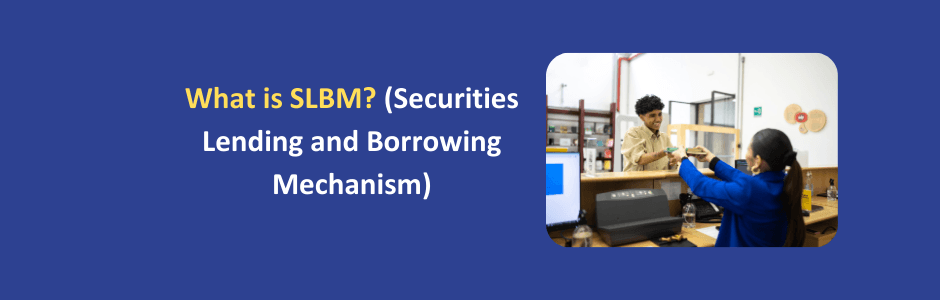
The Securities Lending and Borrowing Mechanism (SLBM) is a facility that allows investors to lend their shares to other market participants in exchange for a fee. It is a SEBI-regulated mechanism in India that improves market liquidity and enables short selling in a structured and transparent way.
If you hold shares in your demat account and want to earn additional income without selling them, SLBM can be an interesting opportunity.
This blog explains what SLBM is, how it works, advantages, disadvantages, risks, and FAQs to help you understand whether it suits your investment strategy.
What is SLBM (Securities Lending and Borrowing Mechanism)?
SLBM is a system introduced by SEBI that allows:
- Investors to lend shares they own
- Traders to borrow shares for short selling
- Lending and borrowing transactions to happen via the stock exchange
In simple terms:
👉 If you hold shares long-term, you can lend them and earn lending fees.
👉 If someone wants to short sell a stock, they can borrow shares through SLBM.
How Does SLBM Work?
Here’s how the process works:
- An investor agrees to lend shares for a fixed period.
- A borrower (usually a trader or institution) borrows those shares.
- The borrower pays a lending fee.
- After the agreed tenure, the shares are returned.
- The lender earns income without selling the shares.
All transactions are routed through NSE/BSE SLBM platform and cleared via clearing corporations, reducing counterparty risk.
Who Can Participate in SLBM?
-
Retail investors
- High Net Worth Individuals (HNIs)
- Institutional investors
- Mutual funds
- FIIs
Participation requires:
- Demat account
- Broker support for SLBM
- Agreement with broker for securities lending
Why is SLBM Important?
-
Enables short selling in Indian markets
- Improves liquidity
- Enhances price discovery
- Allows investors to earn passive income
Advantages of SLBM
-
Earn passive income on long-term holdings
- No need to sell shares
- SEBI-regulated mechanism
- Reduced counterparty risk
- Improves portfolio yield
- Supports market liquidity
Disadvantages of SLBM
-
Lending fee may be low for large-cap stocks
- Corporate action complications
- Temporary loss of voting rights
- Shares locked for lending tenure
- Market volatility risk
- Limited participation in less liquid stocks
Risks Involved in SLBM
- Borrower default risk (though mitigated by clearing corporation)
- Price fluctuation during lending period
- Reduced liquidity during lock-in
- Operational complexity
Taxation on SLBM Income
-
Lending fee earned is treated as Income from Other Sources
- Capital gains apply only when shares are sold
- Taxation may vary depending on holding period
Consult a tax advisor for personalised advice.
Example of SLBM:-
Suppose you hold 1,000 shares of a company:
- Current price: ₹500
- Lending fee: ₹8 per share for one month
- You earn: ₹8,000 (1,000 × 8)
- Shares are returned after the tenure
You continue holding the stock and also earn extra income.
Frequently Asked Questions

Popular Blogs