

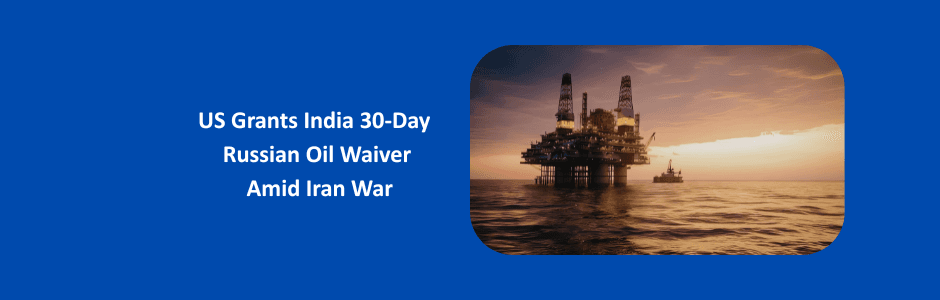
The United States has granted India a 30-day waiver on Russian oil imports (cargo loaded by March 5, 2026, valid till April 4), issued by the US Treasury via OFAC, to stabilize global energy markets amid US-Iran war disruptions at the Strait of Hormuz where 200+ ships are stuck, 150 waiting outside, and 38 Indian vessels trapped.
US-India Russian Oil Waiver – Key Details
|
Aspect |
Details |
|
Waiver Duration |
30 days (cargo loaded ≤ March 5, 2026; valid till April 4, 2026) |
|
Authority |
US Treasury OFAC special license |
|
Purpose |
Allow stranded Russian crude/petroleum delivery to Indian refiners |
|
Trigger |
US-Iran war: Strikes, tanker attacks causing Hormuz gridlock |
|
Shipping Impact |
200 ships stuck in Persian Gulf, 150 queued outside, 38 Indian vessels affected |
|
US Statement |
Treasury Sec. Scott Bessent: "Enable oil to flow; limits Russia benefit" |
|
India Status |
Comfortable stocks, daily replenishment; no LPG/LNG shortage |
Geopolitical Context: Follows Trump sanctions on Rosneft/Lukoil; India reduced Russian buys but now gets relief amid Middle East crisis.
Impact on Global & Indian Energy Markets
Oil Price Reaction: Crude prices fell in early trading post-waiver announcement as supply fears eased temporarily.
India's Position:
- Largest oil importer heavily reliant on Middle East.
- Waiver covers stranded cargoes at sea, preventing shortages.
- LNG risks: Qatar shipments delayed; GAIL assessing cuts, Petronet force majeure possible.
US Strategy: Temporary measure; expects India to ramp up US oil imports in trade deal talks.
Strengths of US Waiver for India
- Immediate supply relief for stranded Russian cargoes amid Hormuz blockade.
- Prevents domestic fuel shortages/LPG hikes with comfortable strategic stocks.
- Stabilizes global crude prices short-term, benefiting Indian importers.
- Diplomatic win balancing US sanctions with India's energy security needs.
- Boosts refiner margins via discounted Russian crude access.
Risks of Reliance on Waiver
- Temporary 30-day limit – post-April, sanctions could snap back harder.
- Escalating Iran war may worsen Hormuz disruptions beyond waiver scope.
- Geopolitical volatility risks sudden US policy reversal under Trump.
- LNG exposure from Qatar/Gulf remains vulnerable to prolonged conflict.
- Ruble payment limits and G7 cap compliance add execution hurdles.

Popular Blogs