

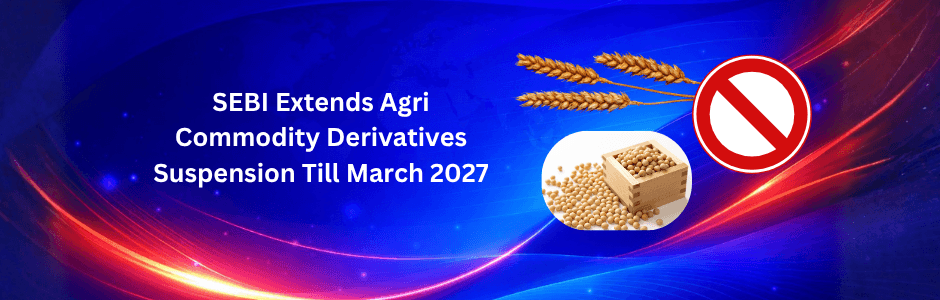
SEBI has further extended the suspension on derivatives trading in seven key agricultural commodities by another year, now keeping the ban in place up to March 31, 2027. The move is aimed at curbing speculative volatility and supporting price stability for essential food items, even as industry bodies have been pushing for a revival of futures contracts.
What commodities are covered?
The continued suspension applies to derivative contracts (futures, options, swaps, etc.) on the following agri‑commodities and their derivatives complexes:
- Wheat
- Paddy (non‑basmati)
- Chana (chickpea)
- Mustard seeds and its derivatives
- Soybean and its derivatives
- Moong (green gram)
- Crude palm oil
Market participants are allowed to square off existing positions but no new long or short futures positions can be initiated in these contracts.
Timeline of the suspension
- Initially imposed on December 19, 2021, with a one‑year ban till December 20, 2022.taxmann+1
- Then extended to December 20, 2023, December 20, 2024, January 31, 2025, March 31, 2025, March 31, 2026, and now to March 31, 2027.moneycontrol+1
This means the restrictions on these agri derivatives will have been in force for over five years when the latest extension ends if not lifted earlier.
Rationale behind SEBI’s move
SEBI has not cited new factors in the latest extension, but the repeated prolongation suggests ongoing concern about:
- Food‑price inflation and volatility linked to speculation in futures markets.
- Price discovery in grains, pulses and edible oils during supply shocks or geopolitical disruptions.
- Protecting consumers and farmers from short‑term speculative spikes, even at the cost of hedging tools for agri‑market participants.
Key impacts on markets and stakeholders
- Hedgers: Farmers, millers, processors and edible‑oil refiners lose a key risk‑management tool for price risk in wheat, pulses, soybean, mustard, paddy and palm oil.
- Commodity brokers and traders: Reduced volumes and revenue from agri segments; some shift to non‑suspended commodities or equity‑linked products.
- Inflation monitoring: Authorities lean on cash‑market prices, while futures‑based indicators remain muted in these key agri baskets.
Strengths
- Aims to curb speculative spikes in food prices.
- Helps dampen inflation‑linked volatility in key staples.
- Removes scope for short‑term market manipulation in agri futures.
- Provides policy time to study impact without sudden reopening.
- Aligns with broader food‑security and inflation control stance.
Risks
- Farmers and processors lose hedging tools against price swings.
- Cash‑market prices can become more volatile without futures price discovery.
- Traders migrate to grey or OTC‑style deals, reducing transparency.
- Missed opportunity for structured risk management and export planning.
- Policy appears more reactive than rule‑based, raising uncertainty when the ban ends.

Popular Blogs