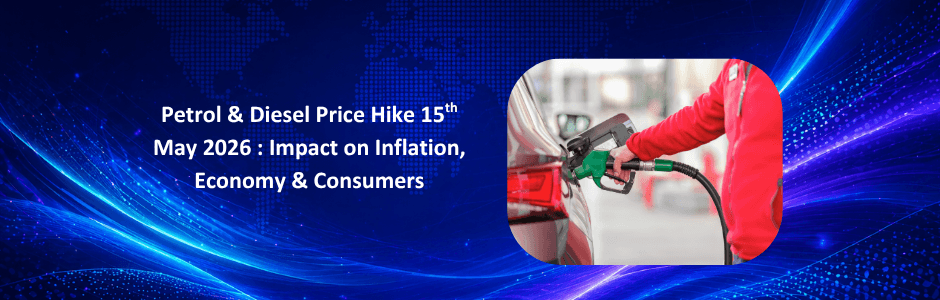
Petrol & Diesel Price Hike on 15th May'26: Impact on Inflation, Economy & Consumers


India has witnessed a fresh hike in petrol and diesel prices, with fuel rates increasing by around ₹3 per litre across major cities. This marks one of the most significant fuel price revisions in recent years and comes amid rising global crude oil prices and geopolitical tensions in West Asia.
The increase is expected to impact transportation costs, household expenses, inflation, and multiple sectors of the economy.
⛽ What Changed in Fuel Prices?
State-run oil marketing companies have increased petrol and diesel prices by approximately ₹3 per litre effective immediately.
Revised Petrol Prices in Major Cities
|
City |
Petrol Price |
|
Delhi |
₹97.77/litre |
|
Mumbai |
₹106.68/litre |
|
Kolkata |
₹108.74/litre |
|
Chennai |
₹103.67/litre |
Diesel prices have also risen sharply across metro cities.
📈 Why Have Petrol & Diesel Prices Increased?
Several global and domestic factors are driving the fuel price hike:
1. 🌍 Rising Global Crude Oil Prices
Crude oil prices surged due to geopolitical tensions and disruptions in the Middle East region, especially around the Strait of Hormuz.
2. 💸 Losses Faced by Oil Marketing Companies
Oil companies had reportedly been absorbing losses for weeks due to elevated crude prices before passing on the increase to consumers.
3. 💱 Pressure on India’s Import Bill
India imports a large portion of its crude oil requirements, making fuel prices sensitive to:
- Dollar strength
- Global crude movements
- Supply disruptions
🚚 Impact on Consumers
🔺 Higher Transportation Costs
Fuel price hikes usually increase:
- Cab fares
- Logistics costs
- Delivery charges
- Public transport expenses
🔺 Rising Household Expenses
Higher transportation costs often push up prices of:
- Food items
- Groceries
- Daily essentials
🔺 Pressure on Monthly Budgets
Consumers may witness broader inflationary impact across multiple categories.
📊 Impact on Inflation
Fuel prices are closely linked with inflation.
Why?
- Diesel powers transportation and logistics
- Higher logistics costs increase prices across industries
Economists believe this fuel hike may add pressure to:
- Retail inflation
- Consumer spending
- Interest rate expectations
🏭 Sectors Likely to Be Impacted
⚠ Negative Impact
- Airlines
- Logistics companies
- Paint & chemical companies
- Cement sector
- FMCG companies (due to higher transportation costs)
✔ Potential Beneficiaries
- Oil exploration companies
- Energy producers
- Select upstream oil businesses
🧠 What Should Investors Watch?
✔ Crude Oil Prices
Global crude movements will remain the biggest trigger for future fuel pricing.
✔ Inflation Data
Fuel inflation can influence RBI policy decisions and interest rates.
✔ Consumption Trends
Persistent fuel inflation may reduce discretionary spending.
📌 Is This a Temporary Increase?
That depends on:
- Geopolitical tensions
- Crude oil supply conditions
- Government intervention
- Currency stability
Analysts suggest fuel prices may remain volatile if global energy markets stay stressed.
Final Thoughts
The latest petrol and diesel price hike reflects the growing impact of global energy volatility on India’s economy.
While the immediate effect will be visible in:
- Transportation costs
- Inflation
- Consumer expenses
…the broader impact will depend on how long crude oil prices remain elevated.
For consumers and investors alike, this is a reminder of how closely fuel prices are tied to:
👉 Global events
👉 Economic stability
👉 Inflation trends

Popular Blogs