

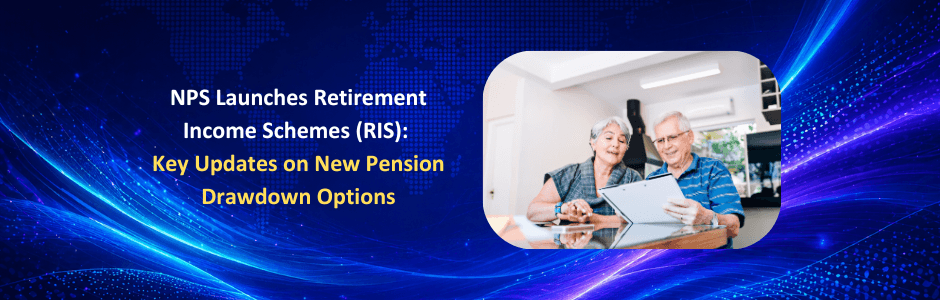
India’s retirement planning landscape is evolving rapidly. In a major move aimed at improving post-retirement financial flexibility, the Pension Fund Regulatory and Development Authority (PFRDA) has introduced new Retirement Income Schemes (RIS) and flexible drawdown options under the National Pension System (NPS).
The update is designed to help retirees manage their retirement corpus more efficiently by offering structured and periodic payouts instead of relying solely on lump-sum withdrawals and annuity income.
But what exactly has changed, and why does it matter for NPS subscribers?
📊 What is the New NPS Retirement Income Scheme (RIS)?
The newly introduced Retirement Income Scheme (RIS) allows NPS subscribers to receive their retirement corpus in a phased and systematic manner after retirement.
Instead of withdrawing a large lump sum immediately at retirement, subscribers can now opt for:
- Monthly payouts
- Quarterly payouts
- Annual payouts
This creates a more stable and predictable retirement cash flow.
💡 What Are the New Drawdown Options?
Under the new framework, subscribers can choose a Systematic Lump Sum Withdrawal (SLW) style payout mechanism.
Key Features:
- Periodic withdrawal from the remaining corpus
- Flexible payout frequency
- Payouts allowed up to age 85
- Mandatory annuity rules continue to apply
The remaining retirement corpus continues to stay invested while generating phased payouts.
⚙️ How Will the RIS Work?
Here’s a simplified structure:
Step 1: Retirement
At retirement, the subscriber allocates:
- Mandatory annuity portion
- Remaining withdrawable corpus
Step 2: Select Drawdown Option
The subscriber chooses:
- Monthly
- Quarterly
- Half-yearly
- Annual payouts
Step 3: Corpus Remains Invested
The unwithdrawn corpus continues to participate in market-linked growth opportunities.
📈 Why This Change Matters
The new RIS framework addresses a major challenge in retirement planning:
👉 Managing retirement income sustainably.
Earlier, retirees often faced two extremes:
- Large lump-sum withdrawal
- Fixed annuity payouts with limited flexibility
Now, RIS offers a middle path with:
- Better liquidity
- Cash flow predictability
- Potential corpus growth
⭐ Key Benefits of the New NPS Drawdown Options
1. Regular Income Flow
Provides steady retirement income instead of one-time withdrawals.
2. Better Corpus Longevity
Phased withdrawals help reduce the risk of exhausting retirement savings too early.
3. Continued Market Participation
The remaining corpus stays invested and can continue compounding.
4. Flexibility
Subscribers can customize:
- Payout frequency
- Withdrawal period
5. Improved Retirement Planning
Helps retirees align withdrawals with:
- Lifestyle needs
- Inflation
- Medical expenses
🏦 Who Can Use the New RIS Option?
The drawdown facility is available for:
- Government subscribers
- Non-government subscribers under NPS
⚠️ What Remains Unchanged?
Despite the new flexibility:
- Mandatory annuity purchase rules continue
- NPS remains a market-linked retirement product
- Investment risks still apply
📊 RIS vs Traditional NPS Withdrawal
|
Feature |
Traditional Withdrawal |
RIS Drawdown Option |
|
Withdrawal Style |
Lump sum |
Periodic payouts |
|
Flexibility |
Limited |
Higher |
|
Cash Flow |
One-time |
Structured |
|
Market Participation |
Ends after withdrawal |
Continues |
|
Corpus Longevity |
Lower predictability |
Better management |
🧠 Who Should Consider RIS?
RIS may suit:
- Retirees seeking regular income
- Investors wanting phased withdrawals
- Individuals looking for post-retirement flexibility
- Subscribers concerned about inflation-adjusted income
📌 Important Things to Consider
Before opting for RIS:
- Assess monthly retirement needs
- Understand market-linked risks
- Review annuity allocation
- Consider inflation impact
- Consult a financial advisor if needed
🌍 Why This Is a Significant Move for Retirement Planning
India’s retirement ecosystem is gradually shifting toward:
👉 Flexible retirement income solutions
The RIS framework aligns NPS more closely with modern retirement planning approaches seen globally, where:
- Phased withdrawals
- Flexible drawdowns
- Continued investments
are becoming increasingly popular.
Final Thoughts
The launch of RIS and new drawdown options marks an important evolution in India’s pension ecosystem.
By allowing systematic and flexible withdrawals, NPS subscribers now get:
- Better retirement income management
- More control over their corpus
- Improved financial planning flexibility
For long-term retirement investors, this move could make NPS an even more attractive retirement planning tool.

Popular Blogs