

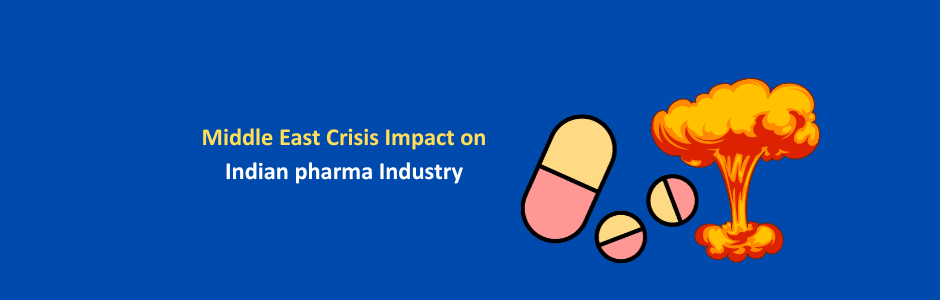
Middle East crisis threatens Indian pharma with temporary API (Active Pharmaceutical Ingredient),cost spikes while chemicals face export disruptions, as $1.75B MENA exports (6% of FY25's $30.47B total), shipping delays via Hormuz/Suez, and energy/logistics inflation hit supply chains, with API manufacturers facing 25% power cost exposure.
Pharma: API & Contract Manufacturing Under Pressure
Supply chain vulnerabilities exposed
- Europe KSMs/APIs routed via Middle East/Suez face 10–15 day delays; biologics/vaccines hit hardest by temperature control risks.
- Petrochemical solvents/intermediates prices up due to crude spike; API makers see 25% cost inflation from power alone.
- MENA exports ($1.75B): UAE, Saudi, Iraq markets see port delays + payment risks; generics critical to regional health systems.
Industry response: 3–6 month inventory buffers (COVID lesson) provide short-term cushion, but prolonged conflict risks production halts.
Chemicals: Easy Pass-Through But Export Volatility
Commodity chemicals
- Petrochemical derivatives (solvents, packaging): Direct crude linkage allows margin-neutral pass-through to customers.
- Freight 3–5x surge: Air cargo for time-sensitive chemicals becomes prohibitively expensive.
Specialty chemicals
- MENA exports disrupted: Gulf refineries (key buyers) face operational issues; Iran payments frozen.
- Earnings volatility: Short-term revenue dip but long-term pricing power intact due to niche positioning.
Analyst view: Chemicals more resilient than pharma due to pricing flexibility, but working capital stress from delayed receivables.
Strengths of Indian Pharma/Chemicals
-
3–6 month inventory buffers provide short-term supply security.
- Chemical pass-through pricing neutralizes crude cost spikes.
- US/Europe demand intact; MENA represents only 6% pharma exports.
- PLI scheme progress: Penicillin-G, APIs reducing China dependence.
- Temperature-controlled logistics experience from COVID era.
Risks from Prolonged Middle East Crisis
-
API production halt if European KSMs delayed beyond inventory buffers.
- 25% power cost spike cripples API manufacturer margins.
- Rupee depreciation worsens imported input inflation.
- MENA payment defaults freeze working capital for exporters.
- Biologics/vaccine spoilage risk from extended shipping times.
Impact Scenarios & Company Exposure
Short-term (1–3 months)
- Pharma: 2–5% cost inflation (manageable with buffers)
- Chemicals: Neutral (pass-through offsets crude)
- MENA exports: 10–20% volume dip
Medium-term (3–6 months)
- Pharma: API shortages → 5–10% price hikes
- Chemicals: Gulf market share loss to China/S Korea
- Earnings: 3–7% EPS compression (selective)
High exposure: API makers (Aarti Drugs, Granules), MENA-focused exporters (Neuland Labs, Suven Life Sciences).

Popular Blogs