

India Slips to 6th Place in Global GDP Rankings: What It Means for the Economy
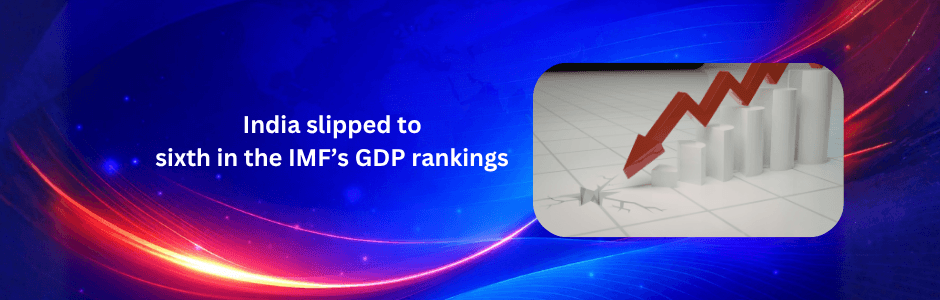
India’s position in the global economic rankings has recently made headlines after slipping from being the 4th largest economy to 6th place, according to updated IMF data.
But does this mean India’s economy is weakening? Not necessarily.
Let’s break down what’s really happening and what it means for investors and the broader economy.
📊 India’s Current GDP Position
As per the latest IMF estimates:
- India is now the 6th largest economy (nominal GDP)
- GDP size: Around $4.1–4.5 trillion
- Countries ahead include:
- USA
- China
- Germany
- Japan
- United Kingdom
👉 Earlier, India had briefly moved ahead to the 4th position after surpassing Japan
🤔 Why Did India Slip in Rankings?
The drop in ranking is not necessarily due to a slowdown in India—but more because of global economic dynamics.
1. 📉 Currency Movements
GDP rankings are based on nominal GDP in US dollars.
- If the rupee weakens → GDP value in USD falls
- Other currencies strengthening can push countries ahead
👉 So rankings can change without actual economic slowdown.
2. 🌍 Faster Growth in Other Economies
Countries like the UK and Japan have seen relative improvements in:
- Currency strength
- Economic output
👉 This affects relative ranking, even if India continues to grow.
3. 📊 Methodology & Data Revisions
IMF regularly updates:
- GDP estimates
- Currency conversions
- Growth assumptions
👉 Even small revisions can shift rankings.
🚀 India’s Growth Story Remains Strong
Despite the ranking change, the fundamentals remain intact:
- India continues to be one of the fastest-growing major economies
- GDP growth expected around 6–7% annually
- Strong domestic demand and consumption
👉 IMF has even upgraded India’s growth outlook recently.
📈 Why This Drop Isn’t a Major Concern
✔️ 1. Rankings Are Relative, Not Absolute
Even if India grows, ranking can fall if others grow faster.
✔️ 2. Focus Should Be on Growth Rate
India’s growth rate is still among the highest globally.
✔️ 3. Long-Term Trajectory Is Intact
India is still projected to:
- Become 3rd largest economy by 2027–28
⚠️ What Are the Real Challenges?
While the ranking drop isn’t alarming, some structural issues remain:
- Low per capita income (~$3,000)
- Dependence on global demand
- Currency volatility
👉 These are more important than short-term rankings.
🧠 What This Means for Investors
💡 Short-Term
- Market sentiment may react to headlines
- No immediate fundamental impact
💡 Long-Term
- India remains a high-growth investment destination
- Strong sectors:
- Infrastructure
- Manufacturing
- Consumption
- Digital economy
🔑 Key Takeaways
- India slipped to 6th position in global GDP rankings
- Driven by currency movements and global factors, not slowdown
- Growth outlook remains strong (6–7%)
- Long-term trajectory toward top 3 economies intact
- Investors should focus on fundamentals, not rankings

Popular Blogs