

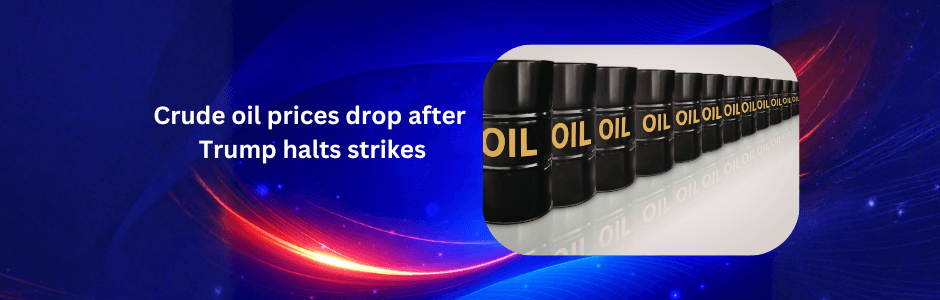
Crude oil prices slipped sharply after Donald Trump paused planned strikes on Iran’s energy infrastructure, easing immediate supply-disruption fears and pushing Brent back below $100 per barrel in the latest move. The reversal came after an earlier spike, showing how sensitive oil is to geopolitical headlines.
What Happened?
Oil had initially surged on supply-risk concerns tied to the Iran conflict, but prices reversed after Trump said the U.S. would temporarily hold off on strikes against Iranian power plants and energy facilities for five days while talks continue.
On Monday, Brent crude fell 6.30% to $99.71 per barrel, while WTI dropped 7.37% to $90.99 per barrel in New York.
Why Oil Prices Fell
The market had been pricing in the risk of a wider disruption to Middle East energy flows, especially around the Strait of Hormuz. Once the strike pause was announced, traders quickly reduced the geopolitical risk premium, triggering heavy profit-booking in crude futures.
This kind of move is common when fear-based rallies lose support and the headline risk softens.
Market Impact
The fall in crude is important because oil prices feed directly into inflation, transport costs, and input costs for many industries. A drop below $100 per barrel is often seen as a relief signal for import-dependent economies, especially India.
For Indian markets, lower crude can support oil marketing companies, paint stocks, airlines, logistics, and broader inflation-sensitive sectors.
What It Means for India
India imports most of its crude, so a sharp oil spike usually worsens the current account deficit and puts pressure on fuel and packaging costs. A pullback in Brent helps ease some of that strain, at least in the short term.
It can also improve sentiment for the rupee and reduce the chances of another inflation scare if the decline holds.
Advantages of the Price Drop
- Eases inflation pressure for oil-importing economies.
- Supports margin recovery for fuel-sensitive sectors.
- Reduces immediate panic in global equity markets.
- Gives traders and policymakers a short-term breather.
Risks That Still Remain
- The Iran conflict is not fully resolved.
- Any fresh attack or retaliation could push oil back up quickly.
- Brent staying near $100 still signals elevated risk.
- Volatility may remain high until talks produce a clearer outcome.

Popular Blogs