

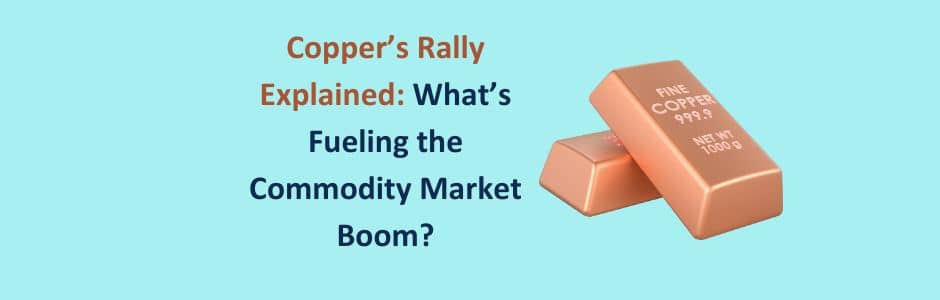
The metals market is witnessing a remarkable phenomenon: copper prices have surged to record highs, earning the metal the reputation of being “on fire.” This rally is not a random spike—it reflects a convergence of strong structural demand, supply tightness, macroeconomic forces, and investment flows. Let’s break down why copper is rallying, what it means for markets, and how investors should think about this trend.
What Does “Copper on Fire” Mean?
When analysts say copper is “on fire,” they mean that its prices have climbed sharply, reaching levels not seen in many years due to unusually strong demand and constrained supply. In late 2025:
- London Metal Exchange (LME) copper futures repeatedly tested major resistance near $12,000+ per tonne.
- Commodities news sources report its largest annual increase in more than a decade, with materials markets broadly buoyed by tight supply.
Copper is no longer just another industrial metal—it’s become a bellwether of global economic activity and technological transition.
Key Reasons Behind the Copper Rally
1. Structural Demand Growth
Copper is essential to modern economies. It’s used in:
- Electric Vehicles (EVs)—copper-intensive wiring and motors
- Renewable energy infrastructure—wind turbines, solar PV installations
- AI data centers & digital infrastructure
These sectors are expanding globally, increasing copper consumption drastically.
2. Supply Constraints
Several significant mine disruptions and production issues tightened global copper supply:
- Operational outages and accidents at major mines have reduced output.
- New mining projects take years and billions of dollars to develop, creating structural limits to production growth.
3. Policy and Macro Tailwinds
- Expectations of central bank easing and lower real interest rates improved risk appetite for commodities.
- A weaker U.S. dollar made dollar-denominated commodities, like copper, cheaper for foreign buyers, lifting prices more.
4. Strategic Stockpiling & Trade Dynamics
At times, tariff policies and inventory behaviors can create short-term imbalances, leading buyers to stockpile copper ahead of expected shortages.
5. Investor Speculation
As copper’s upward move becomes self-reinforcing, financial investors—alongside industrial users—pile into futures and exchange-traded commodities, adding momentum.
Market Impact of the Copper Rally
📈 Commodities and Related Stocks
- Copper producers like Hindustan Copper saw their stocks soar, at times reaching multi-year highs on the back of rising copper prices.
- Broader metals sectors also experienced tailwinds as industrial metal prices climbed.
🏗️ Downstream Industries
- Industries that consume copper—such as electrical goods, construction, and automotive—may face higher input costs if the rally sustains.
🔋 Implications for Inflation
Strong commodities prices can feed into broader inflation, especially in emerging economies where metals are key cost components of infrastructure and manufacturing.
Will the Rally Continue in 2026?
Opinions vary:
- Bullish view: Persistent demand from energy transition and technology sectors could push copper even higher, potentially toward $15,000/t over the next decade.
- Cautious view: Some analysts caution that if mining output or inventory conditions improve, prices could moderate, though supply-demand fundamentals remain tight.
Overall, long-term demand dynamics—especially linked to electrification and net-zero goals—suggest that copper’s elevated price environment may persist beyond a short-lived spike.
Frequently Asked Questions

Popular Blogs