

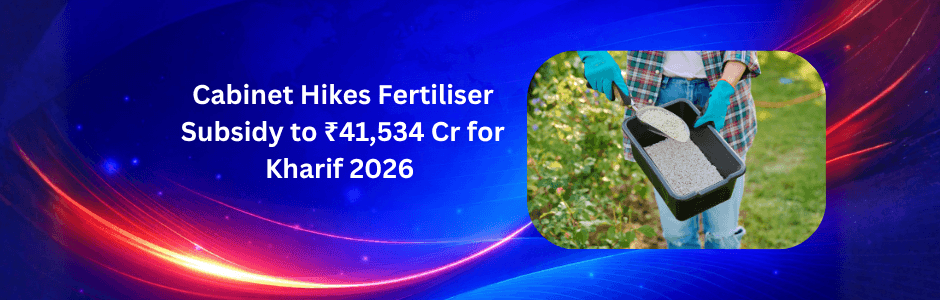
Cabinet approves NBS Package for Kharif 2026
The Union Cabinet approved a ₹41,534 crore Nutrient Based Subsidy (NBS) for Phosphatic and Potassic (P&K) fertilizers during the Kharif 2026 season (April 1 to September 30). This marks a 16% increase of ₹4,317 crore over Kharif 2025's ₹37,216 crore allocation, ensuring affordable DAP, NPK, and 28 other grades for farmers amid rising global input costs.
Purpose & Coverage
The NBS scheme subsidizes key nutrients—Nitrogen (N), Phosphorus (P), Potash (K), and Sulphur (S)—to keep P&K fertilizers priced affordably. Manufacturers/importers receive direct payments, passing benefits to farmers via MRP caps.
Covered Fertilizers:
- DAP (Di-Ammonium Phosphate)
- NPK grades
- 28 subsidized varieties totalindianews+1
Rates reflect international trends in urea, DAP, MOP, and sulphur prices.
Budget Breakdown
|
Season |
Allocation (₹ Cr) |
Change YoY |
|
Kharif 2025 |
37,216 |
- |
|
Kharif 2026 |
41,534 |
+4,317 (+16%) |
Tentative outlay ensures smooth supply during monsoon sowing.
Impact on Farmers & Agriculture
Key Benefits:
- Lower input costs boost profitability.
- Supports kharif crops: rice, pulses, cotton, sugarcane.
- Stabilizes yields amid climate/geopolitical risks.
- Rationalized rates prevent shortages.
Union Minister Ashwini Vaishnaw: "Complete subsidy program worth ₹41,534 Cr approved for Annadatas."
NBS Scheme at a Glance
Launched in 2010, NBS provides fixed nutrient-based rates:
- Ensures transparent, efficient subsidies.
- Covers imports/manufacturing viability.
- Complements urea subsidies.
Strengths
- 16% higher allocation counters global price hikes.
- Covers 28 P&K grades incl. DAP/NPK.
- Ensures affordability during kharif sowing.
- Direct to manufacturers for quick supply.
- Farmer-friendly amid input volatility.
Risks
- Global price spikes could strain budget.
- Diversion/misuse in distribution.
- Weather dependency on kharif output.
- Over-reliance on imports.
- Nutrient imbalance if urea prioritized.

Popular Blogs