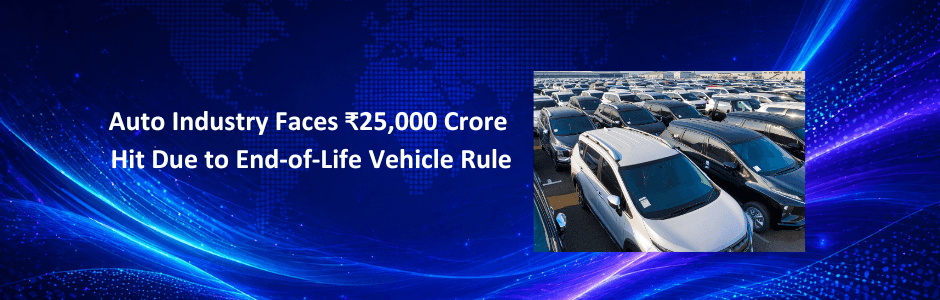
India’s auto sector is staring at a significant disruption as the End-of-Life Vehicle (ELV) rule tightens enforcement across states. With estimates suggesting a ₹25,000 crore impact, the move is set to reshape demand, supply chains, and the broader automotive ecosystem.
But is this purely negative—or a structural reset in the making?
🚗 What Is the End-of-Life Vehicle (ELV) Rule?
The ELV rule mandates the phasing out of old, polluting vehicles based on age and fitness.
Key Guidelines:
- Petrol vehicles: Scrapped after ~15 years (subject to fitness tests)
- Diesel vehicles: Scrapped after ~10 years (in many regions)
- Mandatory fitness testing for older vehicles
- Non-compliant vehicles must be scrapped or deregistered
👉 Objective: Reduce pollution, improve road safety, and modernise India’s vehicle fleet.
💸 Why the ₹25,000 Crore Impact?
The estimated hit comes from multiple disruptions:
1. Demand Slowdown
- Consumers delay new purchases due to uncertainty
- High replacement cost discourages immediate upgrades
2. Inventory & Depreciation Losses
- Older vehicles lose resale value sharply
- Dealers and fleet owners face write-downs
3. Fleet Disruptions
- Logistics and transport companies must replace large portions of fleets
- Immediate capital expenditure pressures
4. Used Car Market Shock
- Oversupply of ageing vehicles
- Price distortions and reduced liquidity
📉 Short-Term Impact on the Auto Industry
🔻 1. Passenger Vehicles
- Slower demand in price-sensitive segments
- Hesitation among middle-income buyers
🔻 2. Commercial Vehicles
- Significant pressure due to fleet replacement costs
- Logistics sector margins may shrink
🔻 3. Auto Dealers
- Inventory challenges
- Lower resale margins
🔻 4. Ancillary & Component Players
- Temporary slowdown in demand cycles
- Supply chain adjustments
📈 The Hidden Opportunity
While the near-term hit looks steep, the ELV policy could unlock long-term gains:
🔹 1. Replacement Demand Boom
Old vehicles being scrapped = new vehicle demand over time
🔹 2. Boost to Scrappage Ecosystem
- Growth in organised scrapping facilities
- New business opportunities
🔹 3. Cleaner & More Efficient Fleet
- Reduced emissions
- Improved fuel efficiency
🔹 4. Push for EV Adoption
- Consumers may shift directly to electric vehicles
- Supports India’s clean mobility goals
🧠 What It Means for Consumers
✔️ Higher Ownership Costs
Replacing vehicles earlier increases financial burden
✔️ Better Technology Adoption
New vehicles offer:
- Improved safety
- Better mileage
- Lower emissions
✔️ Incentives May Help
Government scrappage incentives and discounts could offset costs
📊 Impact on the Economy
- Short-term slowdown in auto sales
- Medium-term recovery via replacement demand
- Long-term benefits through:
- Lower pollution
- Increased manufacturing activity
- Formalisation of scrappage industry
What Should Investors Watch?
🔍 1. Auto Stocks
- Short-term volatility likely
- Long-term growth tied to replacement cycle
🔍 2. EV Ecosystem
- Battery manufacturers
- EV OEMs
- Charging infrastructure
🔍 3. Scrappage & Recycling Companies
- Emerging opportunity segment
🔍 4. Auto Financing Firms
- Increased demand for vehicle loans
⚖️ The Bigger Picture
The ₹25,000 crore impact is real—but it’s also transitional.
👉 The ELV rule represents a shift from:
Old, inefficient vehicles → Cleaner, modern mobility
This transition may:
- Disrupt the industry in the short term
- Strengthen it structurally in the long term
🔑 Key Takeaways
- ELV rule could impact the auto sector by ₹25,000 crore
- Short-term pain due to demand and fleet disruption
- Long-term gain through replacement demand and cleaner mobility
- Investors should focus on structural winners, not short-term noise

Popular Blogs